










郷土館概要 Museum Information
旧済生館 本館:Former Saiseikan Hospital Main Building
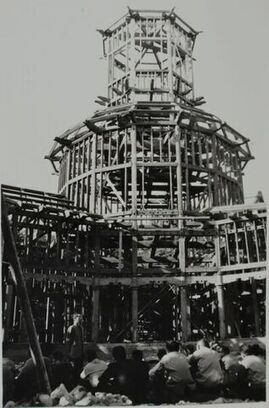
Designated Important Cultural Property of Japan
Built: 1878
Original location: Yamagata City, Nanokamachi
Relocated to: Yamagata City, Kajo Park
Designer: Tsutsui Yoshiaki
Master carpenter: Haraguchi Yusuke
Structure: Wooden
Designated an Important Cultural Property of Japan in: 1966
Relocation/restoration: 1967-1969
擬洋風建築について:Giyo-fu Architecture
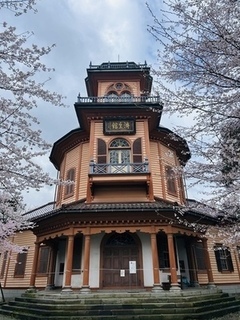
The Former Saiseikan Hospital Main Building is a highly valued example of Giyo-fu (pseudo-Western) architecture. In 1966, it was designated an Important Cultural Property of Japan and remains one of the few surviving hospital buildings from the Meiji period.
Giyo-fu architecture refers to a style that emerged during the early Meiji period, when authentic Western construction techniques had not yet fully spread throughout Japan. Japanese carpenters used traditional building methods while imitating the appearance of Western architecture.
As a result, the building’s design combines Japanese craftsmanship with Western architectural features and, in some areas, even incorporates Chinese influences.
済生館病院:Saiseikan Hospital
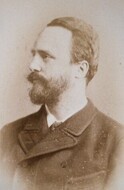
Founded in 1873 in Tendo as a private hospital, Saiseikan Hospital was relocated to Yamagata City in 1874 and reorganized as a public hospital. In 1878, under the direction of Governor Mishima Michitsune, a new hospital building was constructed on the site of the present-day city hospital.
The hospital was given the name “Saiseikan” by the statesman Sanjo Sanetomi, and the name has been preserved to the present day.
Saiseikan Hospital aimed to introduce a modern medical system based on German medicine. The Austrian physician Albrecht von Roretz was invited to serve both as a doctor and as director of the medical school, playing an important role in establishing modern medical treatment and medical education in Yamagata.
移築・復原:Relocation and Restoration
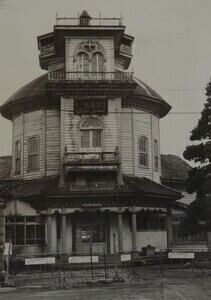
The Meiji-period building later lost much of its original corridors during renovations carried out in the early Showa period. During World War II, the fourth floor was removed because tall wooden structures were considered likely targets for air raids.
After the war, as modernization advanced, plans were made to demolish the aging building. However, its architectural and historical significance came to be widely recognized, and it was designated an Important Cultural Property of Japan.
Between 1967 and 1969, the building was relocated to Kajo Park and carefully restored to its original Meiji-period appearance.
より良いウェブサイトにするために、ページのご感想をお聞かせください。
このページに関するお問い合わせ
文化スポーツ部文化創造都市課
〒990-8540 山形市旅篭町二丁目3番25号
電話番号:023-641-1212(代表)
ファクス番号:023-624-9618
bunka@city.yamagata-yamagata.lg.jp